Cocoa Science · Field Notes

The Science of Bean-to-Bar Chocolate

How a bitter, astringent seed becomes a glossy bar — a step-by-step look at the chemistry of fermentation, roasting and conching, drawn from hands-on laboratory work at Lembaga Koko Malaysia.

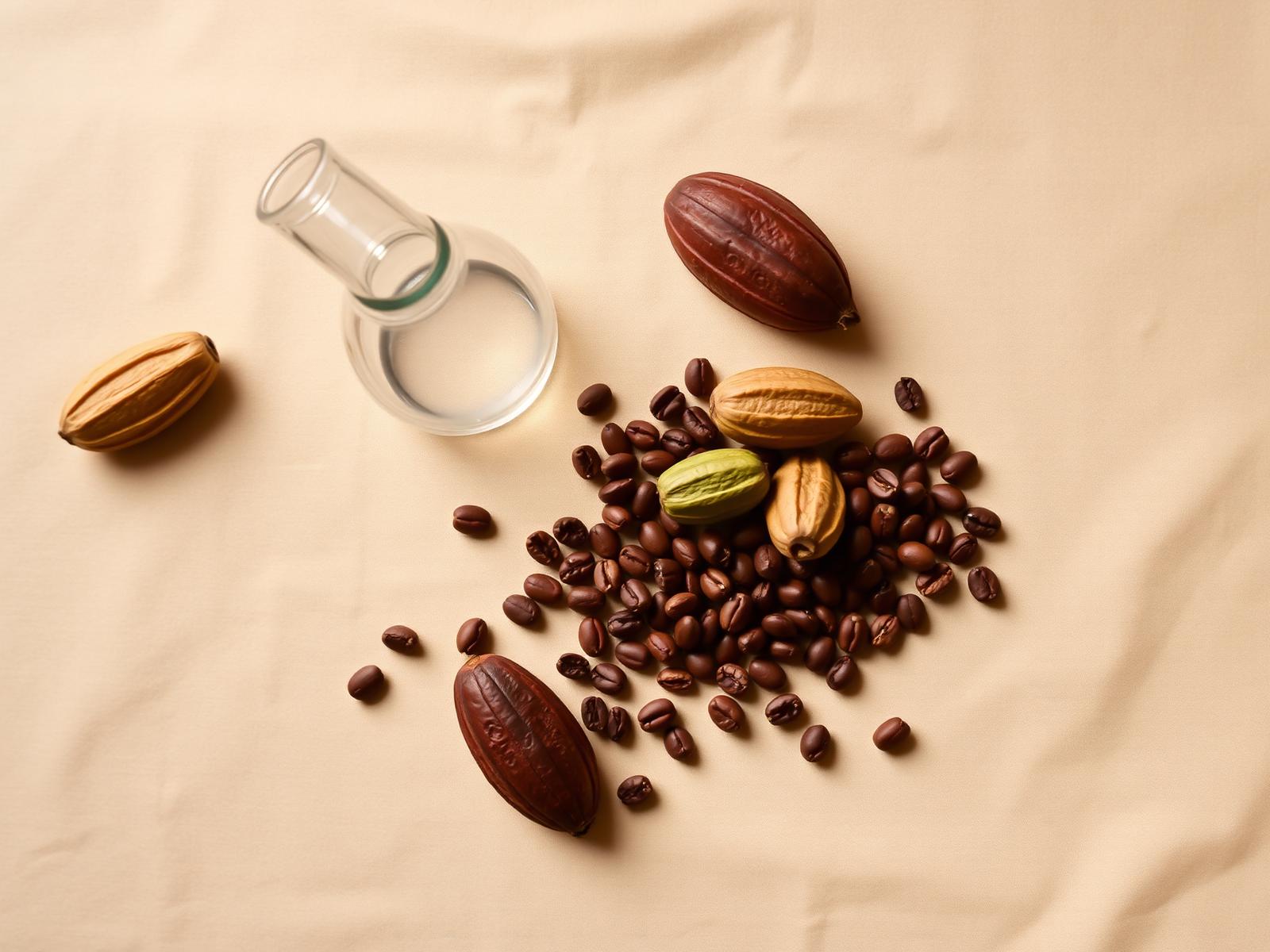
Cocoa beans, cacao pods and a laboratory beaker on cream linen

“Bean-to-bar” means controlling every transformation from raw cocoa bean to finished bar. Each stage is really a controlled chemical process — and small changes in temperature, time and moisture decide whether the final chocolate tastes bright, balanced or burnt.

The Process

From Pod to Polished Bar

01

Fermentation

Freshly harvested cocoa pulp is fermented for 5–7 days. Yeasts convert sugars to ethanol, then bacteria oxidise it to acetic acid. Heat and acid penetrate the bean, killing the embryo and triggering the enzymatic reactions that create flavour precursors — free amino acids and reducing sugars.

02

Drying

Beans are sun- or mechanically dried to roughly 6–7% moisture. Controlled drying halts acetic acid build-up and prevents mould, while allowing residual oxidation that softens astringency and bitterness.

03

Roasting

At 110–150°C the Maillard reaction couples amino acids with reducing sugars to generate hundreds of aroma compounds — pyrazines, aldehydes and esters. Roasting also lowers moisture and volatile acidity and loosens the shell from the nib.

04

Winnowing

Roasted beans are cracked by a bean breaker and the lighter shell is separated from the denser nib in a winnower using airflow. Clean nib separation is critical — residual shell raises fibre and affects flavour and food-safety metrics.

05

Grinding

Nibs are milled into cocoa liquor (mass). Frictional heat melts the ~54% cocoa butter, producing a fluid suspension of cocoa solids. A melanger then refines the particle size with sugar and any milk solids.

06

Conching

The concher applies hours-to-days of shear and gentle heat. Particle size drops below the ~20µm tongue-detection threshold, volatile acids evaporate, and cocoa butter evenly coats every particle — converting a gritty paste into smooth, flowable chocolate.

07

Tempering

Cocoa butter is polymorphic. Controlled cooling and reheating nucleates the stable Form V crystal, giving the bar its glossy snap and resistance to fat bloom. Poor tempering yields dull, crumbly chocolate.

Quality Control

How the Lab Keeps It Honest

Behind every consistent bar sits analytical instrumentation. These are the checks that verify safety, composition and flavour at each stage.

Moisture

Karl-Fischer & moisture analyser

Fat content

Soxhlet extraction

pH & acidity

pH reader / titration

Heavy metals

ICP-MS

Aroma & residues

GC-MS, LC-MS

Particle size

Concher / melanger control

About the author

Written from the lab bench

Muhammad Alif is a Research Assistant in cocoa science at Lembaga Koko Malaysia, working daily with the instruments behind this process.

© 2026 Muhammad Alif bin Abdul Talib · Nilai, Negeri Sembilan